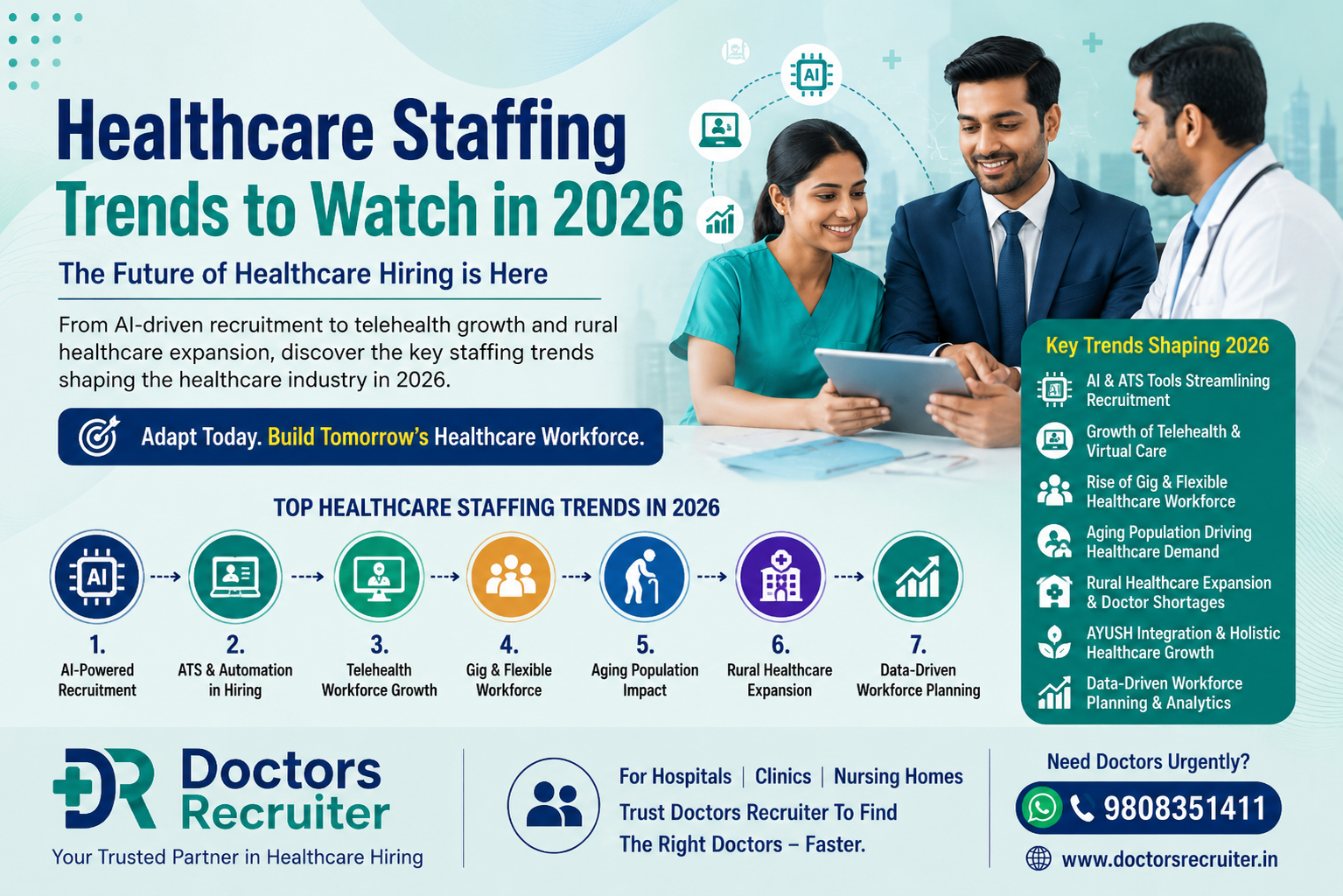
Healthcare Staffing Trends to Watch in 2026
The healthcare industry is undergoing rapid transformation, and recruitment practices are evolving alongside it. As hospitals, clinics, and healthcare organizations face growing patient demands, staffing challenges, and technological disruption, understanding the latest healthcare workforce trends has become more important than ever.
In 2026, healthcare executives, HR managers, and recruiters will need to adapt to changing workforce expectations, emerging technologies, and demographic shifts. From AI-powered recruitment tools to the expansion of telehealth and rural healthcare infrastructure, several trends are expected to reshape how healthcare professionals are hired and retained.
This article explores the most important healthcare staffing trends to watch in 2026 and their impact on India's healthcare ecosystem.
1. AI-Powered Recruitment is Transforming Healthcare Hiring
Artificial Intelligence (AI) is no longer a futuristic concept in healthcare recruitment. It is rapidly becoming an essential tool for healthcare employers looking to streamline hiring processes.
Hospitals and recruitment agencies are increasingly using AI to:
- Screen resumes automatically
- Match candidates with suitable roles
- Schedule interviews
- Analyze hiring patterns
- Reduce recruitment timelines
AI allows recruiters to process large volumes of applications quickly and identify qualified candidates more efficiently. For healthcare organizations facing urgent staffing shortages, this can significantly reduce time-to-hire.
However, AI is not replacing recruiters. Instead, it is enabling them to focus on higher-value activities such as candidate engagement, relationship building, and evaluating cultural fit.
2. Applicant Tracking Systems (ATS) Will Become Standard
Applicant Tracking Systems (ATS) are becoming a critical component of modern healthcare recruitment strategies.
An ATS helps organizations:
- Organize candidate databases
- Track applications
- Manage interview stages
- Improve communication with applicants
- Generate hiring analytics
Healthcare organizations that invest in ATS technology gain better visibility into their recruitment pipeline and improve their ability to fill vacancies quickly.
For doctor recruitment agencies, ATS platforms also enhance collaboration with hospitals by providing real-time updates and streamlined workflows.
3. Telehealth Will Continue Expanding Workforce Demand
The rapid adoption of telemedicine has fundamentally changed healthcare delivery models.
Telehealth services are creating new opportunities for:
- General physicians
- Specialists
- Mental health professionals
- Radiologists
- Remote care coordinators
Many hospitals are now recruiting doctors who can provide virtual consultations alongside traditional in-person care.
Telehealth enables healthcare providers to reach underserved communities, improve patient access, and reduce geographical barriers.
As digital healthcare platforms continue to expand, telehealth staffing is expected to remain one of the fastest-growing segments within healthcare recruitment.
4. Rise of the Gig and Mobile Healthcare Workforce
The traditional full-time employment model is evolving.
Increasing numbers of healthcare professionals are choosing:
- Locum positions
- Contract-based work
- Part-time opportunities
- Teleconsultation roles
- Flexible scheduling arrangements
This shift has led to the emergence of a more mobile healthcare workforce.
For hospitals, flexible staffing models offer greater adaptability during periods of high demand or workforce shortages.
Recruitment firms that maintain strong networks of available doctors will be well-positioned to support this growing trend.
5. Aging Populations Will Drive Healthcare Demand
One of the most significant global healthcare trends is the growth of the senior population.
As life expectancy increases, healthcare systems face rising demand for:
- Chronic disease management
- Geriatric care
- Long-term healthcare services
- Specialized medical professionals
This demographic shift will increase demand for doctors, nurses, therapists, and support staff across multiple specialties.
Healthcare organizations that proactively plan their workforce needs today will be better prepared for future demand.
6. Rural Healthcare Expansion in India
India continues to invest heavily in healthcare infrastructure beyond metropolitan areas.
Growth is being seen in:
- Rural hospitals
- Community health centers
- Primary healthcare facilities
- Diagnostic centers
- Emergency care units
Government initiatives and private-sector investments are helping improve healthcare accessibility in smaller cities and rural regions.
However, recruiting doctors for these locations remains challenging.
Key issues include:
- Limited specialist availability
- Geographic preferences
- Infrastructure concerns
- Retention challenges
Healthcare staffing agencies play a vital role in bridging this gap by connecting qualified doctors with hospitals in underserved regions.
7. Greater Focus on Doctor Retention
Recruitment alone is no longer enough.
Healthcare organizations are increasingly recognizing the importance of retaining qualified professionals.
High turnover can lead to:
- Increased recruitment costs
- Operational disruptions
- Reduced patient satisfaction
- Workforce instability
To improve retention, hospitals are investing in:
- Competitive compensation packages
- Flexible work schedules
- Continuing medical education
- Career development opportunities
- Better workplace culture
Organizations that prioritize employee satisfaction will have a significant competitive advantage.
8. Data-Driven Workforce Planning
Healthcare leaders are increasingly using workforce analytics to guide staffing decisions.
Data-driven planning helps organizations:
- Forecast future hiring needs
- Identify staffing shortages
- Improve workforce allocation
- Reduce recruitment costs
Advanced analytics tools enable healthcare organizations to make more informed decisions regarding staffing levels and resource management.
As healthcare becomes increasingly data-focused, workforce planning will play a central role in organizational success.
9. Increased Demand for Specialist Doctors
Specialist shortages continue to affect healthcare systems across India.
Hospitals frequently struggle to recruit:
- Radiologists
- Anesthesiologists
- Intensivists
- Cardiologists
- Gynecologists
- Orthopedic surgeons
- MD Medicine specialists
The growing complexity of healthcare delivery means specialist recruitment will remain a major priority in 2026.
Recruitment agencies with extensive specialist networks will become valuable strategic partners for healthcare institutions.
10. AYUSH Integration and Holistic Healthcare Models
India's healthcare ecosystem is becoming increasingly diverse.
The integration of AYUSH systems alongside conventional healthcare approaches is creating new opportunities for collaborative care models.
Healthcare organizations are exploring ways to combine:
- Preventive care
- Wellness programs
- Traditional medicine
- Modern clinical treatment
This evolving landscape may create additional staffing requirements and interdisciplinary healthcare roles in the coming years.
11. Global Healthcare Workforce Shortages Will Continue
Healthcare worker shortages remain a worldwide concern.
International healthcare systems continue to face challenges related to:
- Aging workforces
- Increased healthcare demand
- Migration of skilled professionals
- Uneven workforce distribution
These factors are expected to intensify competition for qualified healthcare professionals.
Hospitals that develop strong recruitment strategies and partnerships with specialized staffing agencies will be better equipped to address future workforce challenges.
How Doctors Recruiter Supports Healthcare Organizations
At Doctors Recruiter, we help hospitals and healthcare facilities overcome staffing challenges through efficient and reliable recruitment solutions.
Our services include:
- Doctor recruitment across India
- Specialist hiring support
- Rural healthcare staffing
- Emergency vacancy fulfillment
- Candidate screening and verification
- End-to-end recruitment assistance
By leveraging industry expertise and an extensive candidate network, we help healthcare organizations find qualified medical professionals faster.
Conclusion
The healthcare staffing landscape in 2026 will be shaped by technological innovation, changing workforce preferences, demographic shifts, and increasing healthcare demand.
AI recruitment tools, telehealth expansion, flexible workforce models, rural healthcare development, and specialist shortages will all influence hiring strategies across India and globally.
Healthcare organizations that embrace these trends and invest in strategic workforce planning will be best positioned for long-term success.
As competition for medical talent continues to grow, partnering with experienced healthcare recruitment specialists can provide a significant advantage in attracting and retaining top healthcare professionals.
Internal Links
- About Us: https://www.doctorsrecruiter.com/about_us
- Blog: https://www.doctorsrecruiter.com/blog
- Contact: https://www.doctorsrecruiter.com/contact